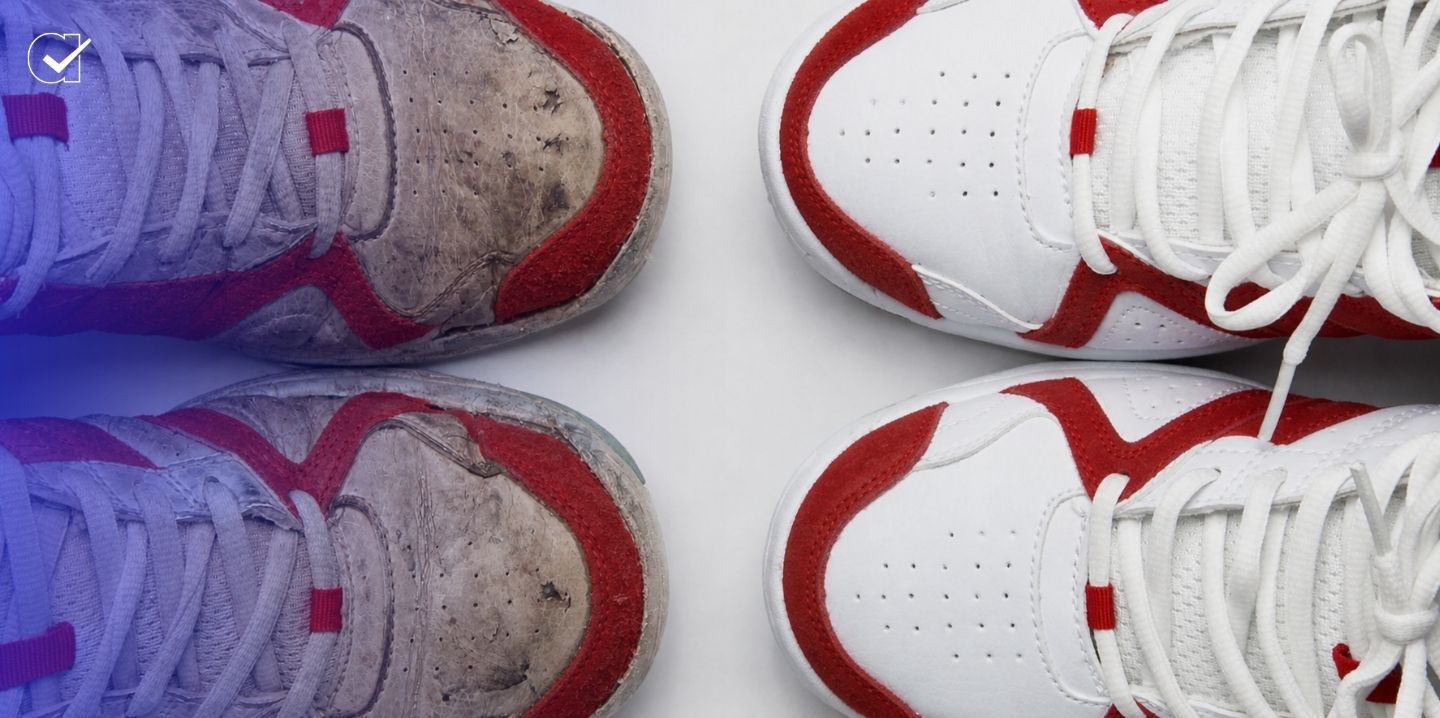
In a shoe’s life cycle, durability isn’t measured only in kilometers walked, but also in its ability to withstand time and environmental stress. Often, the most critical issues don’t come from mechanical wear, but from quiet physico-chemical processes that degrade materials during storage or transport.
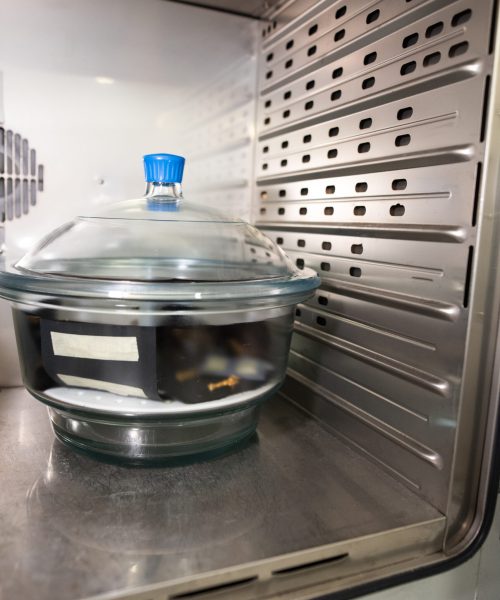
To mitigate these risks, our laboratory uses accelerated aging. With advanced climatic chambers, we expose the finished product to controlled thermo-hygrometric stress conditions. However, it’s essential to clarify from the outset that there is no single universal standard: test conditions (temperature and humidity) are specifically adjusted according to the objective of the analysis and the type of material being evaluated.
A Predictive Model, Not a “Crystal Ball”
A crucial point to understand is that the relationship between laboratory test time and real-world aging time is neither linear nor guaranteed by an absolute mathematical formula. Although consolidated estimates exist (often based on the Arrhenius law, according to which the rate of a chemical reaction increases with temperature), it isn’t always possible to establish an exact equivalence between test hours and months of real-life use.
Natural aging includes complex variables such as UV exposure, ozone, and daily thermal fluctuations—factors that a climatic chamber operating at constant conditions cannot fully replicate. The test should therefore be understood as a comparative stress test: a powerful tool to reveal latent weaknesses and validate process quality against a reference standard, rather than an infallible time prediction.
Test Scenarios: Adapting Conditions to the Goal
Depending on whether the aim is to simulate ocean shipping or evaluate the chemical durability of an outsole, we vary parameters to stress the footwear in different ways.
1) The Logistics Objective: Transport Simulation
When the goal is to ensure goods can survive weeks of shipment in containers, we focus on thermal shock. In this scenario, we set the chamber to 60°C with 85% RH for short cycles (typically 48–96 hours). Here we are not trying to simulate years of service life, but to replicate the “greenhouse” effect inside a container—checking that heat does not improperly reactivate adhesives (causing delamination) and that humidity does not lead to salt blooming or oxidation on metal components.
2) The Chemical Objective: Hydrolysis Resistance
If the focus is the stability of a polyurethane (PU) outsole, a material prone to chemical breakdown, conditions become more severe. Following the principles of ISO 20344, we increase temperature to 70°C and bring humidity close to saturation (95–100% RH) for an extended period of 7 days. In this specific context, passing the test is conventionally considered indicative of a good product shelf-life, excluding the risk of mid-term outsole crumbling.
3) The Environmental Objective: Tropical Climate
For footwear intended for equatorial markets—or to evaluate the general stability of leathers and textiles—we adopt intermediate parameters (50°C and 90% RH). This setup, inspired by leather methodologies (ISO 17228), is used to assess how the overall structure reacts to a constant hot-humid environment, monitoring color shifts, pigment migration, or deformation of natural materials.
Procedure Rigor
Regardless of the objective, the validity of the data depends on methodology. Each session starts with measuring the physical properties of the new sample and ends with an essential reconditioning phase: shoes are gradually brought back to room temperature and left to rest for 24 hours before final analyses (such as sole-to-upper bond strength testing according to ISO 17708). This step eliminates distortions caused by residual heat, giving manufacturers a reliable technical basis for informed decisions on materials and processes.
Accelerated aging is a powerful tool, but it must be handled with scientific rigor. It’s crucial to avoid the temptation to drastically raise temperatures to shorten testing time: exceeding the thermal thresholds of polymers (EVA, PU, adhesives) may trigger unrealistic state changes such as softening or melting. In that case, you would end up “cooking” the product rather than aging it—producing biased data that does not represent real footwear durability.
There is no “one-size-fits-all” protocol: every material and every end-use destination requires specific parameters to obtain meaningful results.
Need to test a new eco-friendly outsole, simulate a critical sea shipment, or define a quality standard for your suppliers?
Contact us to design together the most suitable accelerated aging protocol for your needs.